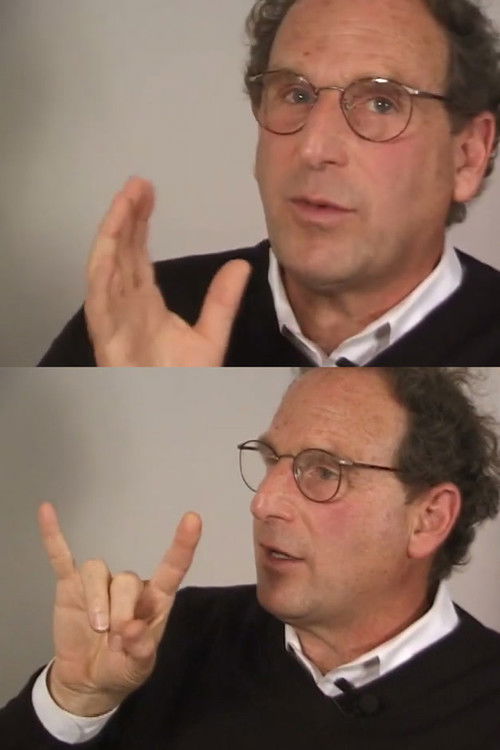
Watch Nathaniel Dorsky: An Interview in streaming IPTV
Nathaniel Dorsky: An Interview
Overview
In his contribution to the On Art and Artists interview series, Nathaniel Dorsky (b.1943) begins by discussing his childhood love of the John Ford film Stagecoach and its influence upon his decision to make films while attending Antioch College. Describing the affinity he developed for work operating at the intersection of film materiality and personal language, Dorsky explains how he developed his philosophy of the “devotional film” and the “microcosmic viewer.” Dorsky likens his practice to Buddhist sculpture, referring to himself as a “Japanese poet continuing aspects of the ethos of the Marxist revolution.” In the interview, the artist describes his use of the screen as an “altarpiece for the image” and emphasizes his use of editing to create works which “harmoniously coalesce.” Interview conducted by Jeffrey Skoller in May 2000, edited in 2014.
Genres
Cast
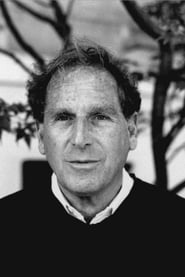
Nathaniel Dorsky
Self
Jeffrey Skoller
Interviewer
Similar titles
good boy
The author's erotic imagination is mixed between desire and magazine clippings, and the trade of collage becomes a ship that travels from outer space to the city itself.

Running Fields IV
Twenty-four images of a camera running in the woods, a moonlight and a cemetery through improvised gestures, mechanical abstraction and saturated colors
The Hypergaussian Wars
The Hypergaussian Wars is an AI-generated feature-length audiovisual work exploring algorithmic warfare, obsolete media and the transformation of images through repetition, saturation and collapse. Built from thousands of generated images, synthetic landscapes and references to 14th–16th century painting, the film stages a continuous conflict between historical visual culture and contemporary computational systems. Fragments of obsolete video games, ruined architectures, military simulations and post-human figures circulate through increasingly unstable environments. Rather than telling a linear story, the film operates as an image system in which visual excess progressively erodes meaning. The Hypergaussian Wars reflects on memory, obsolescence, artificial intelligence and the persistence of images after their original function has disappeared.
Invisible
Shot in black and white, Invisible merges performance art and personal documentary to reflect personal and shared experiences during the military coup. Set in an abandoned building where many young revolutionists sought refuge, the seemingly invisible experiences of displacement, loss, suffering and anger are made visible through words and subtle movements.
Running Fields III
Twenty images of a camera running next to a chemical platform and capturing abstract light throught improvised gestures and asymmetrical motion
Holding Space
Holding Space explores the lived experiences of Burmese immigrants in Singapore under the gaze of neighbours in public flats. With a focus on spatial arrangements and housing exteriors, the experimental film challenges the ways architects visualise and instrumentalise their ways of seeing, seeking to hold space for subjective experiences and the subtle yet persistent influences on our domestic interiors.
Taman Hutan Chapter Four: The Wound Response
TAMAN HUTAN Chapter Four: The Wound Response focuses on the rubber craze of the 20th century through both archival documentation of wages and an interview with Cek Anuan on his grandfather Rasimin who worked with English naturalist Henry Nicholas Ridley. Focusing on the Singapore Botanic Gardens as the site of interaction between colonists and labourers, the film reveals the wounds of those erased from colonial records but who remain inscribed within nature itself.
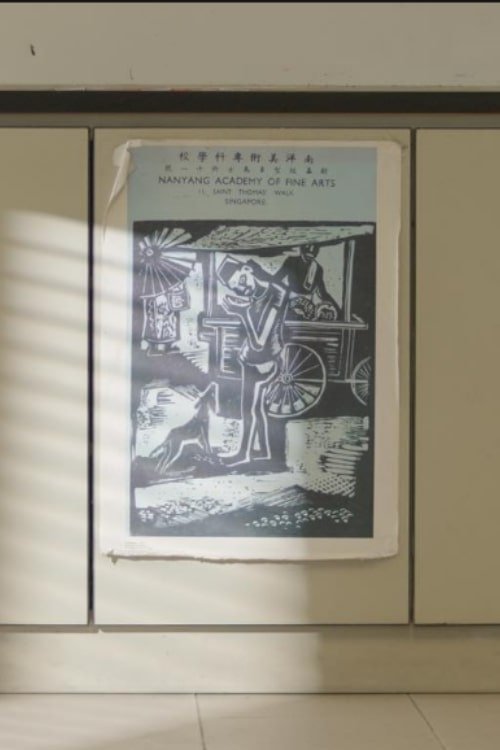
Proximities
Proximities focuses on the trope of the Malay Boy found in the works of Singaporean artist Cheong Soo Pieng (b. 1917-1983). It attempts to locate the Malay male in art history while unpacking underlying systems of power that have shaped and naturalised the understanding of difference.
Reflecting Thought: Stan Brakhage
Stan Brakhage is a film maker whose work is shown mainly at film festivals. His work has been likened to poetry. Brakhage explains his techniques and his motivation.
Breakdown: 1975
In 1975, as America faced social and political upheaval, filmmakers turned chaos into art.
Streaming IPTV FAQ
Can I watch this title through IPTV?
Availability depends on your IPTV provider and the rights included in your subscription. This page uses TMDB data for discovery and does not host video content.