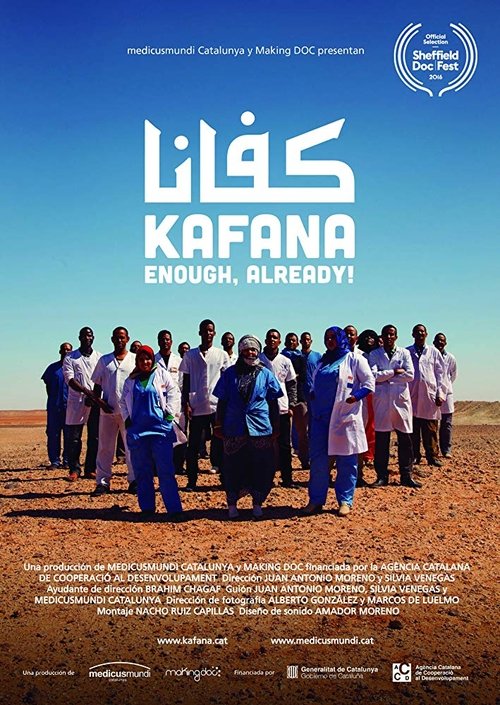
Watch Kafana (Enough, already!) in streaming IPTV
Kafana (Enough, already!)
Overview
A revealing story about Saharawi refugees, their identity, and their exile of more than 40 years in the Algerian desert where they have built up a State based on universal health care and education.
Genres
Similar titles

Gurba, the condemned
Siya, Dumaha, Mata and Aziz are Saharawi refugees that live in camps in Tindouf (Algeria). They show us the daily extreme harshness of an exile that lasts for 40 years. We can discover the unknown reality of torture, mines and maimed people, child malnutrition or mental illnesses that plague the Saharawi people, who are condemned to live away from their homeland.
Saharauiya
The documentary is about the sahrawi women’s role carries out from all areas in her society and developes within the framework of the refugee camps in Tindouf (Algeria). Sahrawi women who have different jobs tell us through several interviews their vital experiences and share their opinion about the difficult situation that they suffer. In parallel with these interviews the documentary shows us how is a typical day of a sahrawi family in which a girl and her friend live a little story of fantasy.
Cast in sand: Najla and Agaila
Two women of different generations struggle for survival, happiness, and freedom in barren desert refugee camps. Here, the displaced people of Western Sahara have rebuilt life after fleeing from Morocco's brutal occupation from their homeland, and continue to cry out for justice. Najla and Agaila's different relationships to their cause reflect their personal narratives, revealed and explored with an intimate approach.

Chabiba
In Hassaniya, the mother tongue of the Sahrawi people "Chabiba" means youth. In the Sahrawi tradition conversations, revolves around a good tea. According to the usual three Sahrawi teas.El take first tea is bitter as life, the history, the life of this people is bitter, because they were first colonized, abandoned, busy and eventually went to war with a neighboring country. The second sweet tea like love, the sweetest part of this conflict is the international status because all international law states that the solution to the conflict goes through a referendum. The third area is soft as death, remained behind war, armed struggle, we are in a part of the struggle of the people much smoother, as the third tea.
Sea of sand
This documentary explains the problems of Western Sahara while occupied by Morocco, the territories liberated by the Polisario Front, and the refugee camps in Tindouf (Algeria). 40 years of human rights violations, cultural, human and economic despoliation (fishing, phosphates,...), but also of resistance, fighting back, dignity, solidarity; and most of all, the women’s defining role in the establishment of a forcefully exiled population in one of the most inhospitable places on the planet.
I am the other
It happens in Ecuador and South Korea, in Italy, in Venezuela and also in Western Sahara. Three men and two women live every day acting against the global corporate order. Their actions are the voices of others, of individuals, of crowds, of many. Those who seek another world.
Four Days in Occupied Western Sahara—A Rare Look Inside Africa's Last Colony
In this exclusive broadcast, Democracy Now! breaks the media blockade and goes to occupied Western Sahara in the northwest of Africa to document the decades-long Sahrawi struggle for freedom and Morocco's violent crackdown. Morocco has occupied the territory since 1975 in defiance of the United Nations and the international community. Thousands have been tortured, imprisoned, killed and disappeared while resisting the Moroccan occupation. A 1,700-mile wall divides Sahrawis who remain under occupation from those who fled into exile. The international media has largely ignored the occupation—in part because Morocco has routinely blocked journalists from entering Western Sahara. But in late 2016 Democracy Now! managed to get into the Western Saharan city of Laayoune, becoming the first international news team to report from the occupied territory in years.
A garden that means more than a garden
Taleb, who came to a refugee camp at the age of five in 1975 and returned there after his studies abroad, tells of his life as a displaced person, his gratitude for the reception and support in Algeria, and his hope that the Sahrawis may one day return to their homeland. For Taleb, this hope drives him to actively prepare for better times: as a graduate in agricultural sciences, he conceived a successful small-scale closed-loop economy in a desert under the most difficult conditions, producing enough food for self-sufficiency.
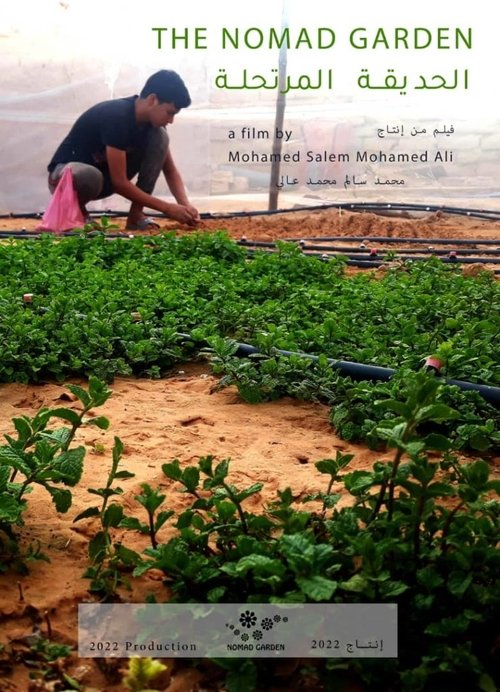
The nomad garden
The Nomad Garden is an ode to the impossible. A young Sahrawi refugee shows how he grows organic vegetables and herbs in one of the most inhospitable places on Earth, overcoming challenges like the lack of water, extreme temperatures and a barren soil.
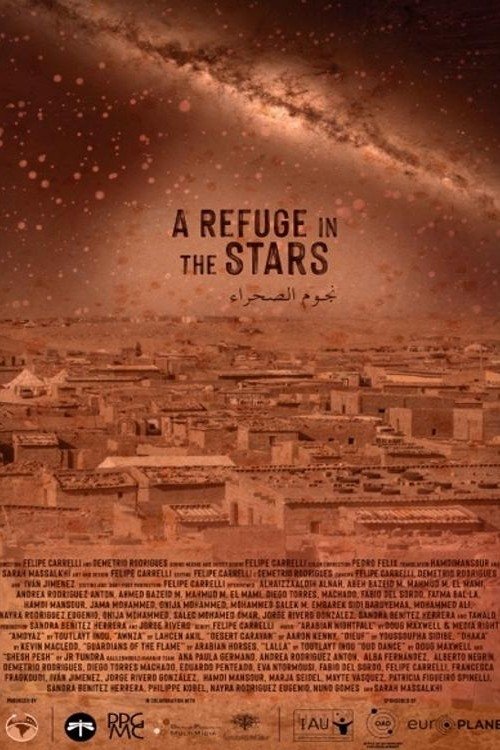
A refuge in the stars
The Sahara desert occupies a third of the African continent and is one of the most inhospitable regions on the planet. The region is dry enough to mummify corpses and kill bacteria. For centuries, the Sahrawis have lived under these extreme conditions in the desert. In 2019, the GalileoMobile project carried out astronomical outreach activities in the five Saharawi refugee camps to exchange knowledge and representations of the cosmos.
Streaming IPTV FAQ
Can I watch this title through IPTV?
Availability depends on your IPTV provider and the rights included in your subscription. This page uses TMDB data for discovery and does not host video content.