Watch Baristas vs Billionaires in streaming IPTV
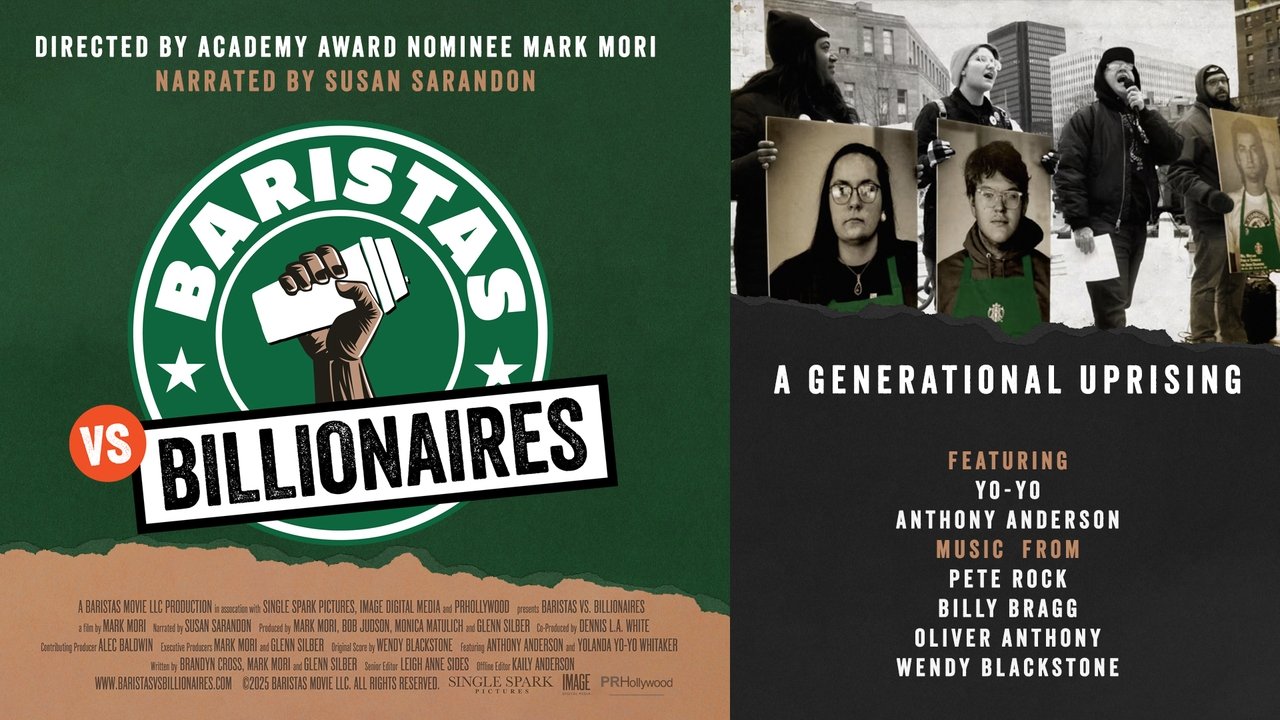
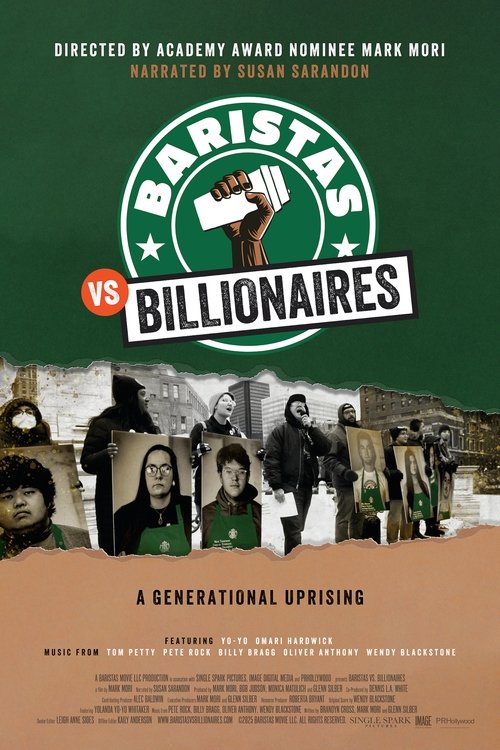
Baristas vs Billionaires
No Contract. No Coffee.
Overview
Starbucks baristas in Buffalo unite against corporate exploitation, sparking a generational uprising among working-class Millennials and Gen Z as they challenge a powerful billionaire CEO and fight for their rights.
Genres
Cast

Susan Sarandon
Narrator

Omari Hardwick
Self (voice)

Yolanda Whitaker
Self (voice)

Kailey Anderson
Self (voice)
Leigh Anne Sides
Self (voice)
Yaninna Scalante
Self (voice)
Similar titles

Mémoires d'un condamné
Mémoires d'un condamné
The Miners' Strike and Me
Documentary marking the 30th anniversary of the 1984 miners' strike, one of the bitterest industrial disputes in British history, with stories from both sides of the conflict.
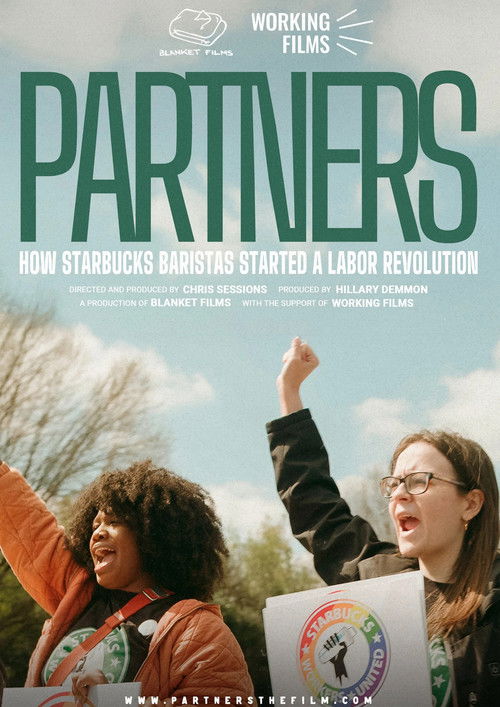
Partners
The story of how a group of baristas in Buffalo, New York announce their intention to form a labor union, and how Starbucks responds with an elaborate and illegal anti-union campaign. Featuring on-the-ground footage from workers and organizers, Partners takes us to the front lines of the historic union campaign that catalyzed America’s Gen Z labor revival.

Feedback
A documentary about teachers' strikes in Iceland in the latter half of the 20th century with a special focus on 1995.
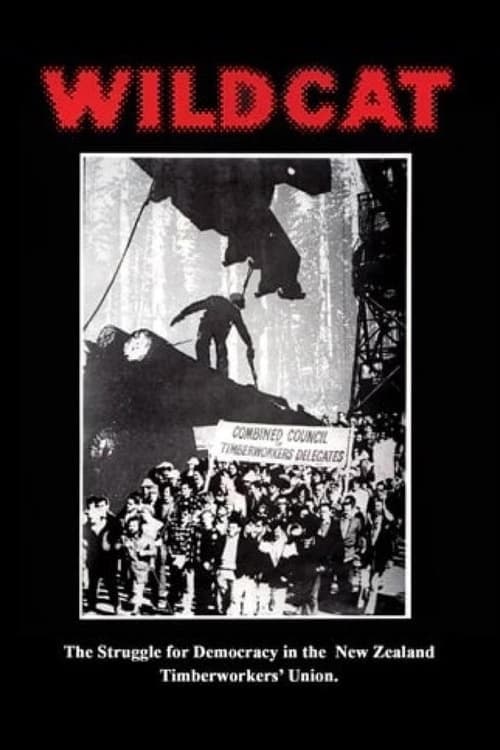
Wildcat: The Struggle for Democracy in the New Zealand Timberworkers' Union
Delegates and workers discuss the issues that effect the Timberworkers’ Union, the reasons for the formation of the Combined Council of Timber Workers Delegates (CCD) and their industrial action.
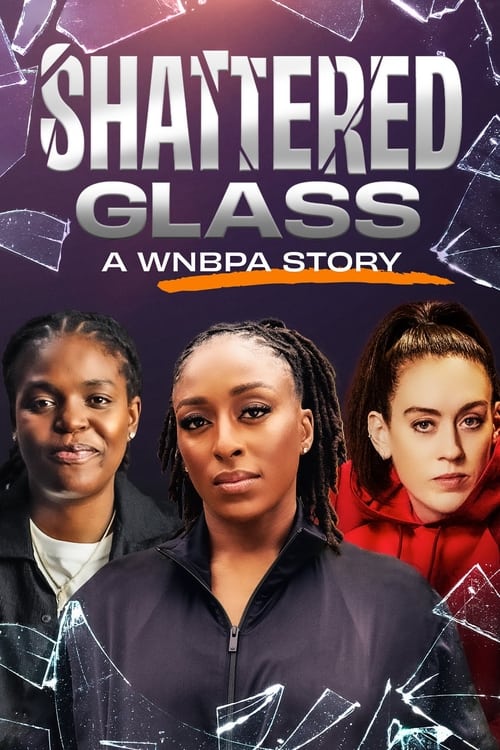
Shattered Glass: A WNBPA Story
Shattered Glass: A WNBPA Story dives deep into the lives beyond the court of the next generation of basketball luminaries, Jonquel Jones, Nneka Ogwumike, and Breanna Stewart, as well as WNBA legend, Sheryl Swoopes. From intense off-season routines to the intricacies of family dynamics to navigating the politics of women's sports, this documentary offers viewers a rare, all-encompassing look at the athletes as holistic individuals.
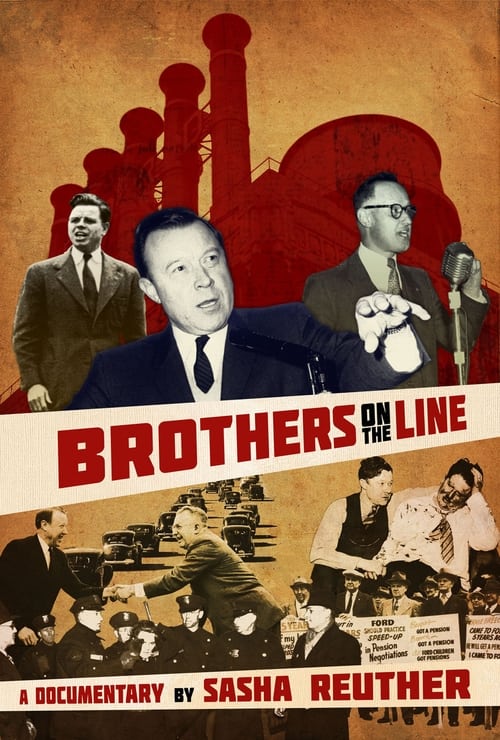
Brothers on the Line
Brothers on the Line explores the extraordinary journey of the Reuther brothers – Walter, Roy, and Victor – union organizers whose unshakeable devotion led an army of workers into an epic human rights struggle.
American Dream
When workers at the Hormel meatpacking plant in Austin, Minnesota are asked to take a substantial pay cut in a highly profitable year, the local labor union decides to go on strike and fight for a wage they believe is fair. But as the work stoppage drags on and the strikers face losing everything, friends become enemies, families are divided and the very future of this typical mid American town is threatened.
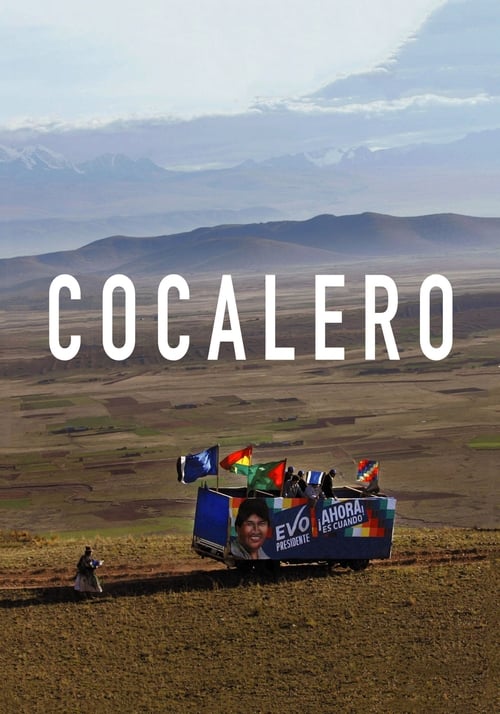
Cocalero
A documentary centered on the union formed by Bolivian farmers in response to their government's (which was urged by the U.S.) effort to eradicate coca crops, and the man who would come to represent them, Evo Morales.
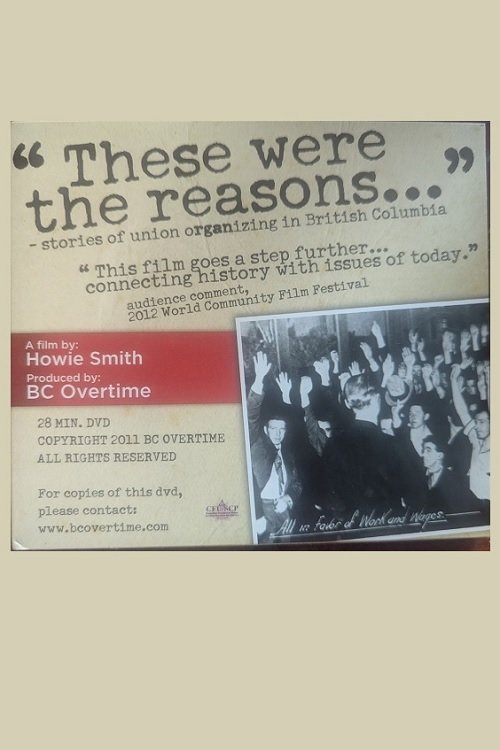
These were the reasons
This film takes us into the harsh realm of BC's early coal mines, canneries, and lumber camps; where primitve conditions and speed-ups often cost lives. Then, the film moves through the unemployed' struggles of the '30s, post WWII equity campaigns, and into more recent public sector strikes over union rights.
Streaming IPTV FAQ
Can I watch this title through IPTV?
Availability depends on your IPTV provider and the rights included in your subscription. This page uses TMDB data for discovery and does not host video content.