Watch Nuuk in streaming IPTV
Nuuk
Overview
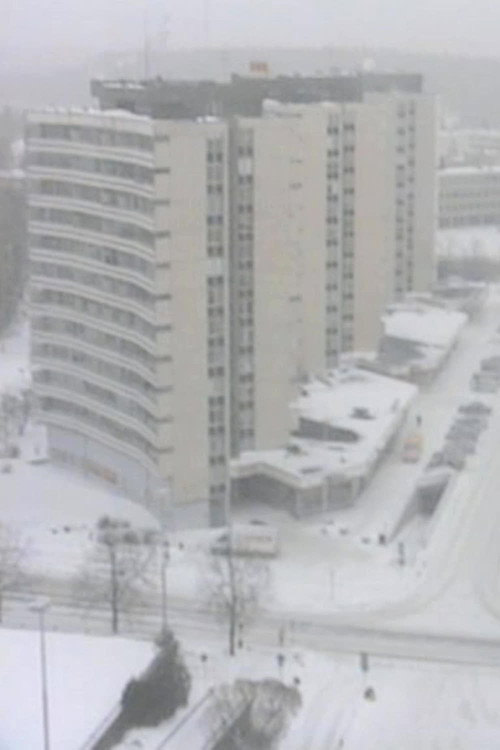
Köner uses sequences of images from webcams as raw material. People and their vehicles appear acoustically, but not visually. The shift from day to night and the influence of the weather gives motion to the segments. He condenses a total of 3,000 individual web images taken from the Internet into one scene. Despite the cinematic motion of the image, it seems like a still photo.
Genres
Similar titles
La Mer
The passing time is displayed as a series of still frames, or a rapid sequence of moments, ever flowing like the waves that break on the shore, like a repeated chant with no beginning, middle or end.
Magma (C)
Drops of fire that create a universe of magmatic asteroids. Liquid and gravitational reality. Cosmic energy. Atomized Rhythm. Neurons of a liberated unconscious. Elimination of the idea of "soul" as "everything", reducing it to the condition of units of energy in perpetual process, elementary particles, without duration, that arise in perfect dependence. The "I" as a stream of units of force in ceaseless becoming that procures the illusion of an entity. Karmic chain. The idea that eternity resides in the transitory, the eternal belongs to it instantly. Eternity not as infinite duration but as absence of temporality. Universe of a mobile, procedural, relational and interactive nature of everything that exists. Here the "object" is conceived as something that is constituted, completed, lost and recovered with the vibrating rhythm of a universe in constant production.
Notes before the Wind
A loose collection of scenes in Hong Kong shot over a five-year period, this film begins with the Umbrella Movement in 2014 and ends right before the summer of 2019, when large-scale social unrest and violent resistance erupted. The everyday scenes capture the ambience and the landscape of change in the city, standing as a quiet prelude to the ensuing conflicts.
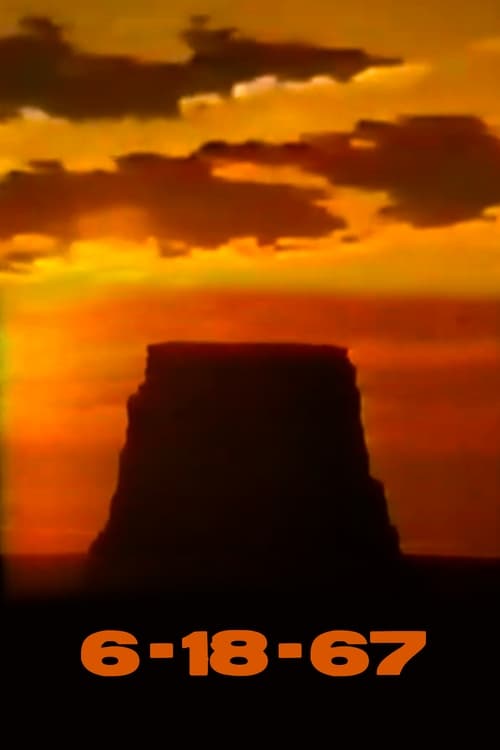
6-18-67
Filmed during the production of the Columbia Pictures western "Mackenna’s Gold," this short work presents a non-narrative visual study of the Arizona desert. Rather than documenting the film set itself, "6-18-67" assembles landscape images, time-lapse photography, and ambient sound into an abstract record of place and duration.
Russia as a dream
In the small town of Kansk, the Krasnoyarsk Territory many years in a row there is an international festival of short experimental films, which has a strong reputation throughout the world. "Russia as a dream" is an international project, shot by a team of authors and united directors, artists, poets. Each of the guests of the 14th International Kan Video Festival held in 2015 was invited to participate in the creation of a general film, the theme of which was the relationship of man and landscape, civilization and nature, reality and sleep.
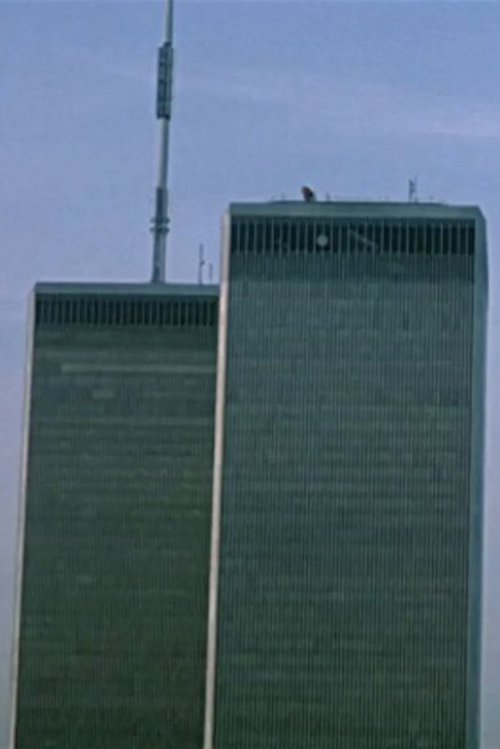
Misty Picture
The television images of the collapse of the World Trade Center were preceded by manifold stagings of the building, either as a highly symbolic icon, a speculative destruction fantasy or merely as a spectacular backdrop. In Misty Picture, city symphony, disaster movie and media trauma therapy become one.

Every Ambulation a Betrayal
Return to 'burn' only to find out you're already in that urn.
We Could All Do With a Little Back & Forth As Far As It Concerns the To & Fro of Everywhere Each of Us Go
(Some of us) Still run down the same [mental&emotional] streets we revered/reproached/replaced as children.
Light by Chance
Experimental short film playing with light and how it appears through reflections, lenses, and distortions
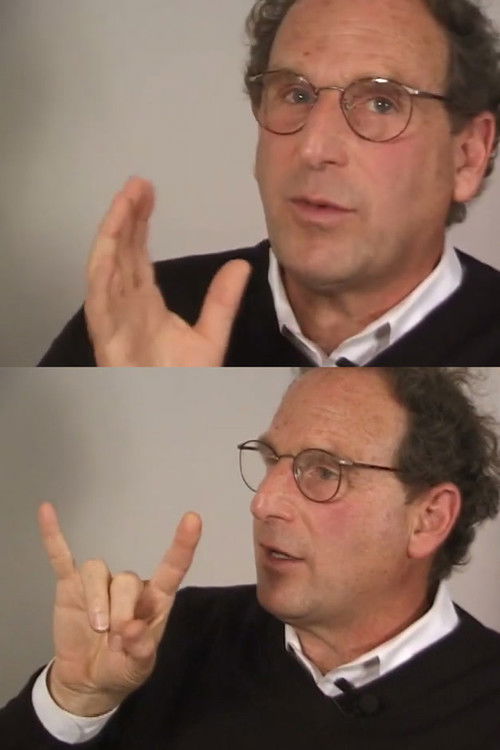
Nathaniel Dorsky: An Interview
In his contribution to the On Art and Artists interview series, Nathaniel Dorsky (b.1943) begins by discussing his childhood love of the John Ford film Stagecoach and its influence upon his decision to make films while attending Antioch College. Describing the affinity he developed for work operating at the intersection of film materiality and personal language, Dorsky explains how he developed his philosophy of the “devotional film” and the “microcosmic viewer.” Dorsky likens his practice to Buddhist sculpture, referring to himself as a “Japanese poet continuing aspects of the ethos of the Marxist revolution.” In the interview, the artist describes his use of the screen as an “altarpiece for the image” and emphasizes his use of editing to create works which “harmoniously coalesce.” Interview conducted by Jeffrey Skoller in May 2000, edited in 2014.
Streaming IPTV FAQ
Can I watch this title through IPTV?
Availability depends on your IPTV provider and the rights included in your subscription. This page uses TMDB data for discovery and does not host video content.