
Overview
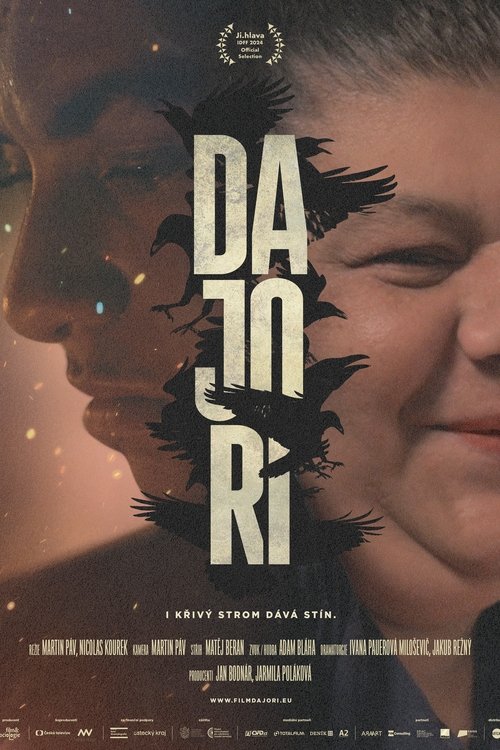
The protagonist of Dajori (mother in Romani) is forty-five-year-old Marie Hučková, who lives with her husband in Varnsdorf. After her younger sister Iveta ends up on the streets with her nine children, she decides to take her own fate and theirs firmly into her own hands and attempts to break out of the vicious circle of poverty that characterises their hometown. This sensitive film, which captures three years of a newly formed family's life together, follows the small joys and daily challenges of caring for others and asks whether a mother's love can overcome the dysfunctional system in which socially excluded localities find themselves.
Genres
Similar titles
Helping Mihaela
A Roma beggar on his knees raises many extreme emotions: guilt, rage, sympathy and frustration. Most people just walk on by, but there is always someone willing to help. In this film, the director follows the confrontations between the Roma beggars from Romania and Finnish people, and is forced to question, over and over again, her own ideas about helping.
Friends of the Ghetto
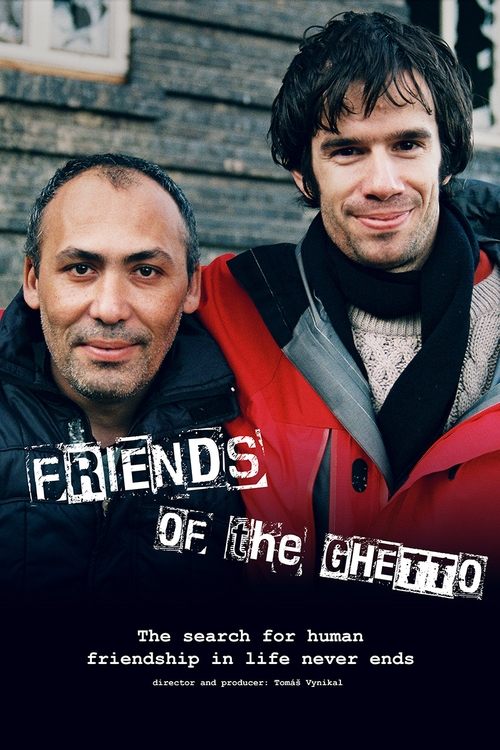
The young director Tomas Vynikal arrives at the Roma ghetto in search of humanity. With an authentic approach, he finds true friendship, but also human corruption. Everything is kept in the dark when the city of Prerov sells the ghetto together with its inhabitants to a private company for the purpose of new housing construction. This company will only go so far to demolish part of the houses and end up insolvent. The work is also a picture of current social problems in the Czech Republic, where human dwellings are meaninglessly devastated. These inhabitants receive new rental flats from the state, thus another ghetto is being created and society is moving in a catch 22 circle. The film contains time spent from September 2010 to September 2020.
Carmen
A documentary about a young Finnish Romany Carmen, 11, who lives with her grandmother and aunt in the suburb of a small town in Northern Finland.

Grigny, la fabrique de la banlieue
As France's first ZAC (Zone d'Aménagement Concerté, or concerted development zone), Grigny is the ideal place to describe how France transformed its dream of a happy suburb into an impoverished urban nightmare. The film aims to leave the camera rolling throughout the story, to discover the inhabitants and the labyrinths of yesterday and today, and to answer the essential questions. From the residents to the architects, including the city of Grigny, the mayor, the prefect, the landlords, and the ANRU (National Agency for Urban Renewal), the film examines and deciphers the consequences of what happened in Grigny and the state's housing policy. Through the analysis of Grigny's history, we see how the state has participated and continues to participate in the creation of social exclusion.

Acasă, My Home
In the wilderness of the Bucharest Delta, nine children and their parents lived in perfect harmony with nature for 20 years – until they are chased out and forced to adapt to life in the big city.

Leaving to Remain
With the UK’s hardening immigration policy in the background, director Mira Erdevički follows the lives of three Roma: Petr Torák, Denisa Gannon and Ondrej Oláh. Settled in the UK over 20 years ago, the trio still feel attached to their native Slovakia and the Czech Republic. As the country goes into lockdown, they film their lives throughout the Covid pandemic and the aftermath of Brexit.

Citizen Miko
Miko is a truck driver, his father is Romani, and above all he is a man who wanted to help those in need. When the Czech government was looking for reasons not to take in a few dozen children from Greek refugee camps after the chemical attacks on Syrian civilians in 2018, Miko took justice into his own hands and, together with the Czechs Helping initiative, prepared facilities for child refugees. However, government officials gave priority to political interests. Will parliamentary elections and a change of ministries save the situation? An unflattering but accurately portrayal of the Czech Republic as a country that will only offer a helping hand when it is worthwhile.
Heavy Heart
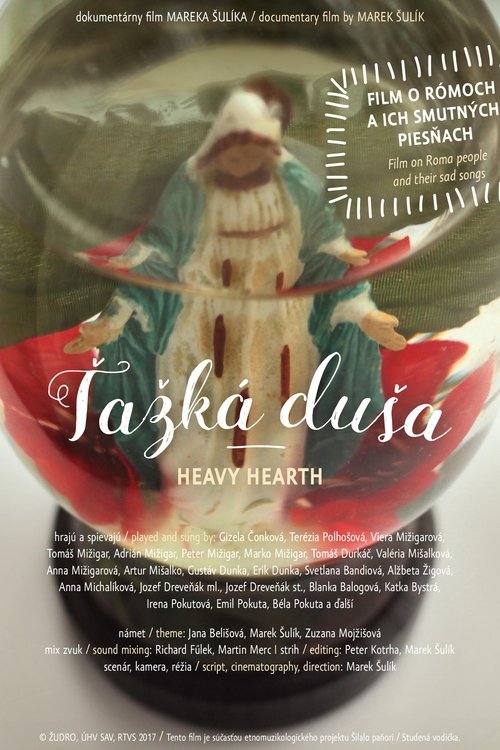
Documentary film Heavy Heart arose as a part of ethnomusicological research Silalo panori / Cold water (2014 – 2017) of ancient Roma songs. These songs are usually connected with memories and experiences of their interprets. Documentary in a mosaic-like way traces the way of the original Roma music transport to the next generation or also how it ceases to exist under the influence of social changes.

Hood Movie: Is the City One Only?
The city of Brasilia hoped to become, from its very architecture, the expression of modern urban conception and an egalitarian society. However, neither the workers hired to pursue this project, nor the constant migratory flow that took place from the beginning, fitted in the government’s plan. In 1971, it began what was known as the “Campaign to Eradicate Invaders”. Together with other locals, the director reflects on the history, the transformations and the future of this place where the hypocritical official jingle “A cidade é uma só!” is no longer heard.
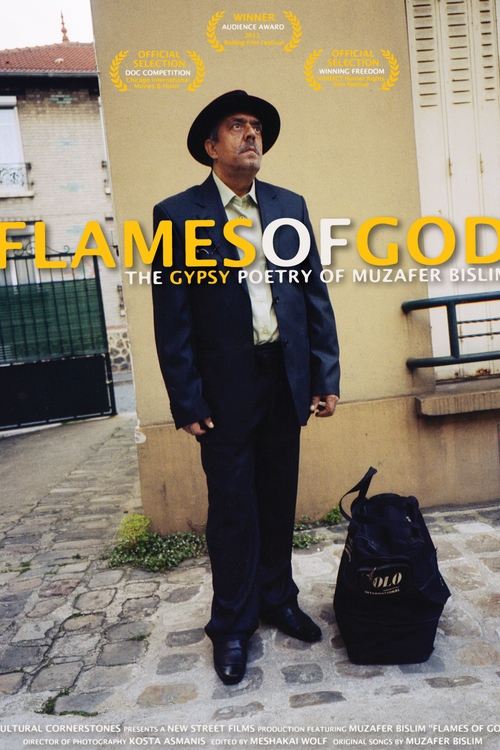
Flames of God
Muzafer Bislim comes up with some of his most insightful songs while sitting on the floor, recording lyrics into a cassette recorder bought at a flea market. A poet and songwriter who collaborates with the biggest names in Romani music, the 54-year old lives a life of modest means with his family in Shutka, Macedonia. Stored in the corner of his one-room house is a tottering, ceiling-high stack of handwritten, 25,000-word, multi-dialect dictionary of the oldest and most obscure words in the Romani language, which he has painstakingly collected over 35 years. When he's invited to the International Biennial of Poets held in Paris, he sees the trip as an opportunity to have his dictionary published. A testament to the endurance of a people who have been scattered across Europe, the dictionary is not only a work of art but also a rare link to a divided past.
Streaming IPTV FAQ
Can I watch this title through IPTV?
Availability depends on your IPTV provider and the rights included in your subscription. This page uses TMDB data for discovery and does not host video content.